New people. New places. New protection.
Some older teenagers and new students under 25 may be eligible for the MenB vaccine.
Following recent outbreaks of meningitis in the UK, the MenB vaccine is being offered to some older teenagers and students under 25 who are at higher risk of exposure to meningococcal group B bacteria.
Meningococcal disease is rare, but it can be dangerous. It can cause meningitis and sepsis, which can become life-threatening if they are not treated quickly.
Who may be eligible?
The MenB vaccine is being offered to some older teenagers and new college and university students under 25 who are at higher risk.
If you’re eligible, it’s important to take up the offer before you start your classes.
Why it matters
Meningococcal bacteria can spread through close contact, including living in the same household, kissing, or sharing drinks or vapes.
Two doses of the MenB vaccine help protect against the most common strains of meningococcal group B bacteria in the UK.
Remember your second dose
One dose is not enough to provide protection. Your second dose must be given at least 28 days after the first dose. Protection then develops about two weeks after the second dose.
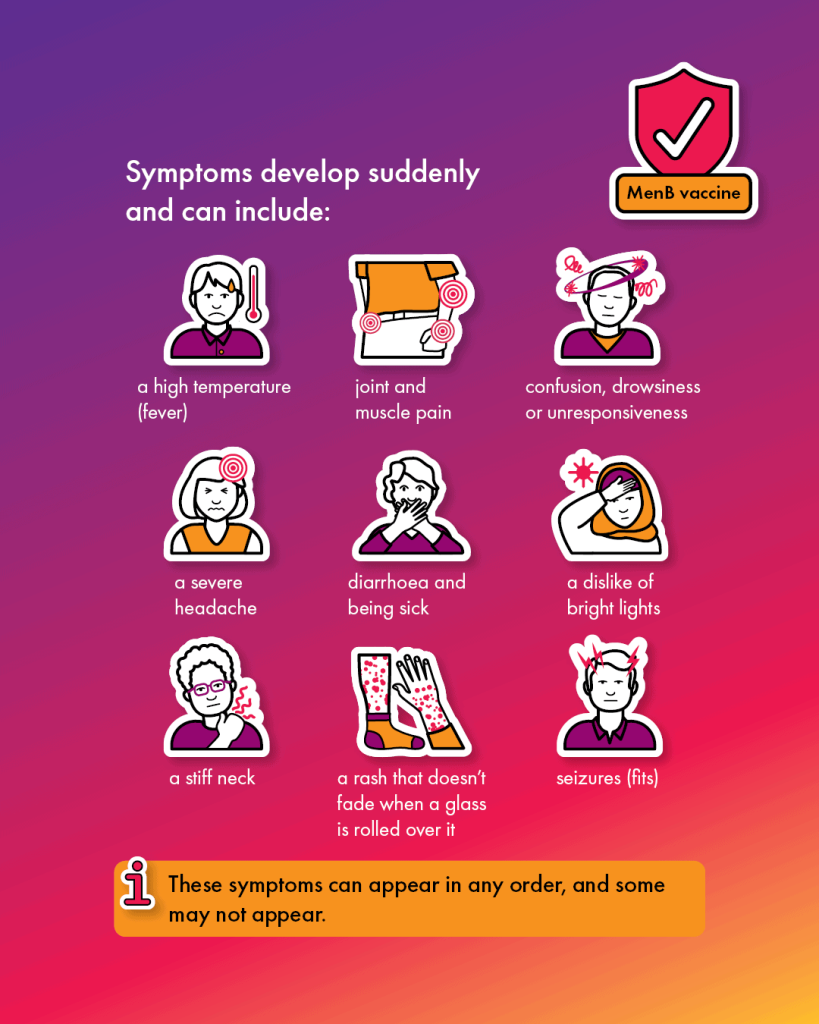
Know the signs of meningitis and sepsis
Meningitis and sepsis can develop quickly. If you, your friends or flatmates have symptoms of concern, don’t be afraid to seek help.
- Phone 999 for an ambulance or go to your nearest A&E immediately if you think you or someone you know might be seriously ill.
- Phone 111 or your GP practice for advice if you’re not sure if it’s serious, or if you think you may have been exposed to someone with meningitis.